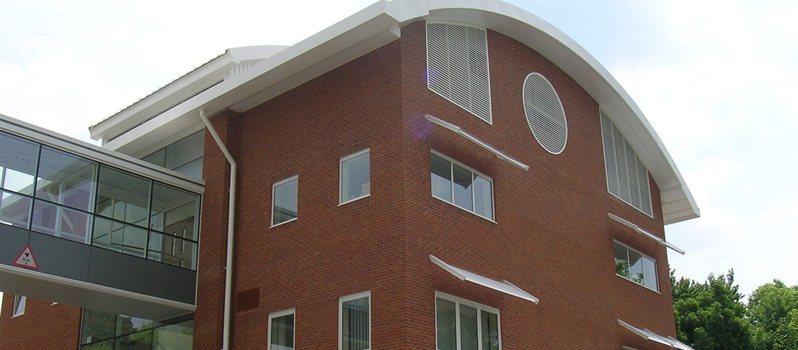
Medical Research Building and Trafford Centre
BSMS' state-of-the-art Medical Research Building and Trafford Centre on Sussex campus provide an outstanding resource for around 70 medical research scientists, working on cell signalling, developmental biology, neuro-inflammation, human genetics, cancer, infection and immunity.
The laboratories include facilities for:
- molecular biology
- tissue culture
- drosophila growth
- advanced microscopy
- flow cytometry (Becton Dickinson LSR II)
- cell sorting (Becton Dickinson Aria II)
- histology
- phlebotomy
- containment (level 2 and 3 labs)
- biobanking (-80⁰C and liquid nitrogen).
These facilities support a number of processes in both basic research where maximum flexibility is required as well as clinical trials where samples can be processed, analysed and stored in the BSMS Biobank according to regulated guidelines.
The laboratories are managed by a team of four who provide training in laboratory techniques to undergraduate and postgraduate students and clinical research fellows. For any requirements, please contact Erika Cummings, the Unit Administrator on e.cummings@bsms.ac.uk.