BSMS is pleased to welcome Professor Ivonne Solis Trapala, newly appointed Director of the Brighton and Sussex Clinical Trials Unit (BSCTU). A Professor of Medical Statistics and Clinical Trials, Ivonne brings extensive experience in clinical trials methodology, real world evidence studies and leadership across major UK research infrastructure.
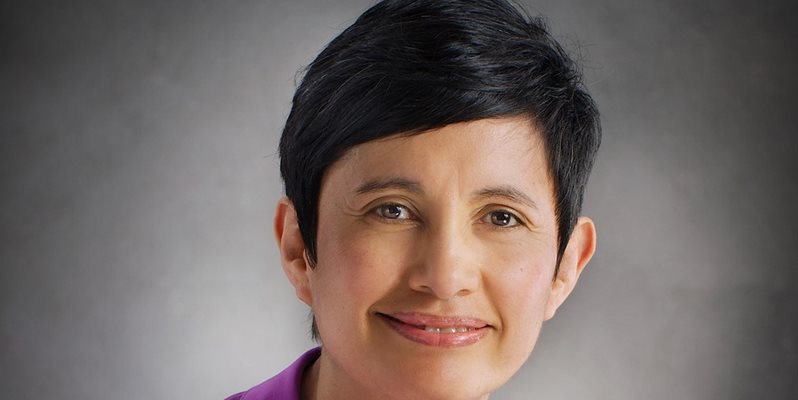
Her work focuses on using complex health data to improve understanding of patient journeys and outcomes across a range of conditions. As she joins BSCTU at a time of significant opportunity for clinical research across Sussex, Ivonne will help strengthen collaboration across the region and further develop the Unit’s role in delivering high quality, impactful research.
In this Q&A, we hear from Ivonne about her background, priorities for BSCTU and her vision for the future.
1. What attracted you to the role of Director of the BSCTU?
I was excited by the breadth of expertise across Brighton and Sussex Medical School and the wider partner universities, and the opportunity to bring that together through collaborative clinical research.
BSCTU already has strong foundations, excellent people and close links with NHS and academic partners across the region. I was particularly drawn to the opportunity to build on those strengths and support research that makes a meaningful difference to patients and communities.
2. Could you tell us about your background and experience in clinical trials?
I originally trained in probability and statistics in Mexico and became interested in clinical trials during my Master’s, where I worked on stopping rules in sequential designs. That work explored how inference is affected by the way data are observed over time and led me to broader questions about how study design affects what we can reliably learn from data.
I came to the UK for a PhD at the MRC Biostatistics Unit in Cambridge, where I developed methods for analysing longitudinal data with discrete outcomes. This work was closely connected with applied clinical research, including collaborations with colleagues at SHORE-C on trials of training programmes aimed at improving communication between patients and healthcare professionals.
Since then, my work has focused on applying statistical methods to complex health data and study design, particularly in long-term and multi-condition patient pathways.
More recently, I led the UKCRC-registered Keele Clinical Trials Unit and co-directed an NIHR Research Support Service Hub, contributing to national research infrastructure while supporting study design, funding applications and delivery with NHS and academic partners.
3. What is your vision for the Unit over the next few years?
My vision is for BSCTU to be recognised nationally for delivering research that is innovative, inclusive and impactful.
That means combining methodological rigour with innovative approaches to study design and delivery, while keeping patient and population benefit at the centre. I want the Unit to be a trusted partner for researchers, clinicians and external collaborators, known for supporting high-quality research from early development through to delivery, with a focus on timely and efficient delivery.
A key part of this is ensuring our work reflects the needs of the communities we serve, particularly those under-represented in research.
4. What are your key priorities in your first year as Director?
My first priority is to understand the strengths, needs and ambitions of colleagues across BSCTU and our partners, and how the Unit can best support them.
I will also focus on strengthening partnerships and building a sustainable and well-balanced portfolio of studies, working closely with NHS and academic collaborators, and in partnership with patients and communities.
A further priority is ensuring our systems and ways of working support efficient, high-quality study design and delivery.
I also want to continue developing capability in data-enabled and methodologically robust research, and support people so that BSCTU remains a supportive place to develop skills and careers.
5. How does the BSCTU support researchers and clinicians, particularly those new to running trials?
We work with researchers and clinicians from the earliest stages of a research idea through to study design, delivery and reporting, ensuring projects are conducted efficiently and to a high standard.
For those new to trials, this often means helping to shape the research question, advising on design and feasibility, and supporting the practical and methodological requirements needed to secure funding and approvals. For more experienced researchers, we help strengthen and refine proposals, improving methodological robustness and enhancing the competitiveness of funding applications.
We aim to make the process as accessible as possible while maintaining the standards needed for high-quality research.
We see the Unit as a collaborative partner rather than a service function, and early engagement is often the most effective way to ensure studies are well designed and deliverable.
6. What role does partnerships with the NHS, industry and other academic institutions play in BSCTU’s work?
Partnerships are fundamental to how we design and deliver research that is relevant, feasible and impactful.
Our relationships with NHS organisations across the Sussex region ensure that studies are grounded in clinical practice and reflect the needs of diverse patient populations and services. Academic partnerships bring methodological strength and enable us to work across disciplines and research themes. Collaboration with industry can also support innovation, additional capacity and wider translational impact.
Taken together, these partnerships strengthen the quality, reach and deliverability of our research, and are essential to building a sustainable and diverse portfolio.
7. What do you see as the biggest challenges currently facing clinical trials in the UK?
Clinical trials in the UK are operating in an increasingly complex environment, with rising expectations around speed, efficiency and inclusivity alongside high scientific and regulatory standards.
A key challenge is ensuring studies remain feasible and well-designed in the context of more complex patient populations, data sources and delivery settings. Improving recruitment and retention is also critical, particularly to ensure studies reflect the diversity of the populations they are intended to serve.
There is also a need to strengthen the workforce and infrastructure that support trial design and delivery, so that high-quality studies can be delivered consistently across different settings.
These challenges also create opportunities to rethink how we design and deliver research, particularly through better use of data, stronger collaboration, and earlier integration between methodological and clinical teams.
8. How is BSCTU responding to opportunities around innovation, inclusion and digital approaches to trials?
We are developing our capacity to integrate data-enabled and digital approaches into how we design and deliver studies, particularly through better use of routine health data and linked datasets.
This has the potential to improve study efficiency, strengthen evidence from real-world settings and support more flexible and scalable trial designs where appropriate.
Inclusion is embedded in this direction of travel, with a focus on designing studies that are accessible to a wider range of participants and reflect the populations who will ultimately benefit from the research.
We are also working closely with clinical and academic partners to ensure that methodological innovation translates into practical improvements in trial delivery.
9. How does the Unit support training, career development and capacity building in clinical research?
We support career development across the full range of clinical research roles, from early-career researchers and clinicians to trial managers, statisticians and data specialists.
A key part of this is creating opportunities to learn through involvement in active studies, alongside structured support and mentoring. This allows people to develop skills in real research environments.
We also contribute to formal training and CPD, including teaching on the BSMS Clinical Trials Management CPD module. This brings case studies and practical insight from current trials into a five-day course for healthcare professionals, covering trial design, set-up, ongoing management and the roles of Principal and Chief Investigator.
Alongside this, we build longer-term capacity through PhD supervision and early-career fellowships, as well as support for senior researchers and clinicians developing major research programmes and funding applications, working in close partnership with NHS and academic colleagues. This helps strengthen the pipeline of expertise needed for high-quality clinical research.
10. What would you like colleagues and external partners to know about working with BSCTU?
BSCTU is here to work collaboratively and pragmatically with colleagues and partners across all stages of research.
Whether developing an early research idea, planning a funding application, or seeking support with a study or trial, we bring methodological expertise and a shared commitment to delivering high-quality research.
If you are considering a research project, I would encourage you to get in touch early. We are always open to discussions and to exploring how we can work together.
Find out more about BSCTU here >