Skip to main contentSkip to footer
A black and white photo of people waiting in a medial centre. Image credited to Alex Kumar
Brighton & Sussex Medical School

Centre for Equitable Global Health Research

BSMS > Research > Global health and Infection > Centre for Equitable Global Health Research

Centre for Equitable Global Health Research

Welcome to the Centre for Equitable Global Health Research.

We aspire to improve global health by building a globally recognised, sustainable and people-centred research network that models equitable partnerships and conducts rigorous, ethical and impactful research on neglected health conditions in Official Development Assistance (ODA) countries. Our aspiration, values and approach can be found below. 

View our strategy here >

Countries of institutions with which CEGHR has an active or recent funded partnership agreement

A map showing the countries and locations the Centre of Equity global health works and collaborates with around the world via blue pins

Map credit: decolonialatlas.wordpress.com

Who we are

Three men in a medical centre waiting room. Image credited to Alex Kumar

The Centre for Equitable Global Health Research (CEGHR) at Brighton and Sussex Medical School (BSMS) is a growing network representing more than 200 interdisciplinary researchers focused on research with, and in, Overseas Development Aid recipient countries. It brings together more than 25 partner institutions, across 23 countries, 21 of which are current Overseas Development Aid recipients.

First launched in 2014, CEGHR is now one of the University of Sussex’s 12 Centres of Excellence, which draw together world-leading experts and innovative approaches, creating a critical mass of knowledge, skills and training to prove that a challenge is only ‘impossible until it's done’. 

Executive Team

  • Director: Prof Gail Davey, Professor of Global Health Epidemiology, BSMS
  • Non-Executive Director: Prof Getnet Tadele, Addis Ababa University, Ethiopia
  • Deputy Director: Dr Maya Semrau, Principal Research Fellow in Implementation Research, BSMS
  • Centre Research Fellow: Dr Gemma Aellah, Research Fellow, BSMS
  • Centre Administrator: Yasmine Khreisheh, BSMS

Find out more about who we are in our video below.

Partnership Steering Group

  • Bahadir Celiktemur, Research and Policy Manager, The Leprosy Mission, UK
  • Dr Chido Dziva Chikwari, Assistant Professor, London School of Hygiene & Tropical Medicine, UK/Zimbabwe
  • Mrs Desta Lakew, Group Partnership and External Affairs Director, Amref Health Africa, Kenya
  • Dr Kingsley Asiedu, Medical Officer, Department of Neglected Tropical Diseases, WHO, Switzerland
  • Dr Kwame Shanaube, Executive Director, Zambart, Zambia
  • Dr Mirgissa Kaba, Professor of Cultural Epidemiology, School of Public Health, Addis Ababa University, Ethiopia
  • Prof Pallab Maulik, Deputy Director, George Institute for Global Health, India
  • Prof Richard McManus, Dean, BSMS UK
  • Dr Saeideh Babashahi, Senior Research Fellow in Health Economics, BSMS, UK
  • Prof Salome Charalambous, Group Chief Scientific Officer, The Aurum Institute, South Africa
  • Tesema Nigusie, Former Assistant Professor, Hawassa University, Ethiopia
BACKGROUND IMAGE FOR PANEL

Research areas

Person's foot with podoconiosis, on bike

Research conducted in the Centre spans infectious diseases (including antimicrobial resistance and tuberculosis), Neglected Tropical Diseases (including podoconiosis, scabies and mycetoma), HIV (specifically prevention and links with climate change), social and cultural influences on health (including end of life care, mental health and stigma), and sustainable healthcare. From an early focus on genetics and genomics, the Centre now uses a wide range of research disciplines and approaches to address these health topics, including implementation science, spatial epidemiology, health economics and anthropology. 

Find out more here >

Vision and approach

Three men in robes in a health centre in Ethiopia. Image credited to Alex Kumar

An important focus of the Centre is the international partnership model used, which from the outset has emphasised sustainable, equitable partnerships and encouraged frequent reflection on their progress.

A focus on co-creation of research with national Ministries of Health, researchers and affected people has enabled us to deliver research on topics of national importance, of which several have had international impact. The Centre actively networks with national partners including funders of global health research, policy-makers, cross-institutional academic groupings and a doctoral training consortium. The Centre’s relationships with Universities, Research Institutes, Non-Government Organisations and Ministries of Health in ODA countries, and with international policy-makers such as the World Health Organization, are fundamental to its research and the translation of this research into impact in the wider community.

Another strong focus of the Centre is capacity-building and provision of high-quality training for the next generation of researchers, including for PhD students and early-career post-doctoral researchers. Long-term tranches of funding (e.g. through the National Institute for Health and Care Research (NIHR) Global Health Research Unit for NTDs and NIHR 5S Foundation) have enabled genuine research capacity strengthening in ODA partner institutes as well as at BSMS. 

BACKGROUND IMAGE FOR PANEL

Upcoming events

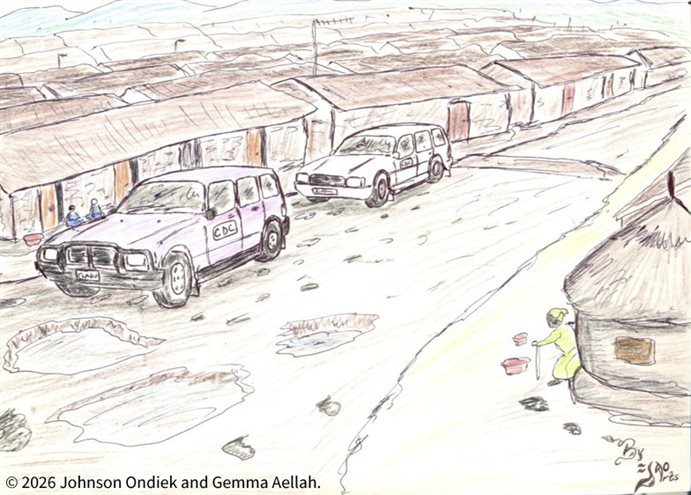
Drawing of a Landrover and cars park on a street drawn in pale grey's, whites and browns.


Fix the Land Rover or Change the Path?

Equity tools, quick fixes, and radical rethinks

Centre for Equitable Global Health Research interdisciplinary workshop on Equity in Global Health Research Partnerships
 
Equity in partnership is the value that brings our network together. Making it happen is much harder. This workshop approaches the problem from two ends. First, we explore quick fixes for the projects we are running now. Then we provoke a radical rethink of where we are going as a Centre. Some partnership problems can likely be fixed quickly with a good toolkit. Others may call for a different path altogether.

Thursday 26 November 2026, 11:00–13:00 GMT (Time Zone Converter)

Join Zoom Meeting Here >
No registration is required. Participants can join on Zoom directly via the link above.

Add to calendar: Apple  /  Google /  Office 365  / Outlook  / Outlook.com  /  Yahoo Calendar

Before the session
Look through the EquiPar Tool in the CEGHR Resources Drive Folder (link below), try it out on one of your projects and jot down a few notes. Add any other tools you would recommend to others to the folder. Please also bring along ideas for Part Two questions, however bold.


CEGHR Resources Drive Folder  


Part one: Fixing the Land Rover we've got
Led by Dr Kwame Shanaube, Executive Director, Zambart
Some problems might need quick fixes (or just oil and service). EquiPar is a tool designed to help individual project teams. Kwame will open Part One with a short talk about how using the tool helped bring to the surface hidden or difficult-to-discuss problems in one of the partnerships she was involved in, and how the team addressed them. We'll then discuss your experience of trying the tool in preparation for the workshop. How did you find it? Could it work across the Centre, perhaps with some changes?
 
Part two: Changing our path
Led by Professor Abebaw Fekadu, Head of CDT-Africa, Addis Ababa University
Abebaw will open Part two with a short talk that invites us to think deeply and radically about what kind of Centre we want to be. He argues that equitable partnership is not just the right thing to do. It is also a smarter, better, quicker way of achieving our goals. Yet time isn’t on our side, neither quick fixes nor commitment to an ideal is enough. Questions for discussion:
Who are the real partners of this cause? How do we show it matters for everybody? Can we build platforms that are less bureaucratic but just as effective? What can we learn from other academic and activist movements?
 

Programme
 Time  Session  Led by               
11:00 –11:05    Welcome and housekeeping   Gem Aellah 
11:05 –11:55  Part one: Fixing the Land Rover (short talk, then   discussion)  Kwame Shanaube
11:55 –12:05  Break  
12:05 –12:55  Part two: Changing our path (short talk, then   discussion)  Abebaw Fekadu
12:55 –13:00  Wrap-up and next steps  Getnet Tadele


Who should attend?
This event is open to all. We welcome researchers, students, practitioners, professional services staff, policymakers, funders, partners, and anyone interested in global health, equitable research partnerships, and international collaboration.


Please share this event widely with colleagues, collaborators, networks, and organisations who may be interested.

BACKGROUND IMAGE FOR PANEL

Launch event

Centre for Equitable Global Health Research officially launches 

Thursday 22 May saw the official launch of the newly renamed Centre for Equitable Global Health Research (CEGHR) at BSMS. The event opened with warm remarks from Professor Jaime Vera, Head of the Department of Global Health and Infection, followed by an insightful overview of the University of Sussex Centres of Excellence from Pro-Vice Chancellor Professor Keith Jones. The event also saw a reflection on the Centre’s journey and future direction, with presentations from Professor Gail Davey and Dr Maya Semrau unveiling the new webpage and strategy document. The keynote of the event was an inspiring talk by the Centre’s new non-executive director, Prof Getnet Tadele, who shared his Global Health Journey and Perspectives. Watch his full talk on YouTube below.