Skip to main contentSkip to footer
Research Engagement Network (REN) logo
Brighton & Sussex Medical School

The Sussex REN

BSMS > Research > Support and governance > SHCRP > REN > The Sussex REN

The Sussex REN

The Sussex Research Engagement Network (REN) is helping more people from different communities to take part in health and care research. It is connecting health & care researchers and underserved communities so that they can work together to design and deliver meaningful and accessible research. 

The Sussex REN brings together local universities, health trusts, hospitals, GPs, councils and community organisations; all working together to ensure that health and care research includes everyone it should and that it is easier for communities to join. 

A group of people around a table with a blue cloth talking during an event

BACKGROUND IMAGE FOR PANEL

Our work

We work with community, health, university and local authority partners to ensure health and care research in Sussex is inclusive and helps address health inequalities.

Our work focuses on including people who don’t speak English as a first language, minoritised ethnic groups, LGBTQ+ groups, people from socio-economically deprived areas, and other marginalised backgrounds.

We connect health and care researchers and underserved communities so that they can work together to design and deliver meaningful and accessible research. 

What is a Research Engagement Network and why is it needed? >

A group of people sat around a table smiling during a public research event

Our objectives

The Sussex Diversity in Research Engagement Network (REN) was launched in October 2023 to increase participation in health and care research. Objectives of the Sussex REN:

  • Embed community research as a core part of health and care research across Sussex.
  • Build capacity for community research through skills development, support, and shared learning.
  • Increase the participation of underserved and marginalised communities in health and care research.
  • Strengthen collaboration and partnership between academia, VCSE organisations, community researchers, and health and care partners.
  • Strengthen public awareness, trust, and inclusion in health and care research across Sussex.
  • Demonstrate and share the impact of community research in shaping research priorities, design, delivery, outcomes and translation. 

BACKGROUND IMAGE FOR PANEL

Our approach

The Sussex REN builds trusted and inclusive partnerships between academia, voluntary, community and social enterprise (VCSE) organisations, and the health and care system. Visit our Collaboration section for more on working together to deliver local health & care research.

We support meaningful and equitable involvement in research, helping to ensure that studies reflect the needs, experiences, and priorities of communities across Sussex.

Why community engagement is important

Community engagement helps ensure that the voices, views, and experiences of people who are marginalised or who experience health inequalities are heard and acted upon.

By involving diverse communities in shaping and delivering health and care research, we can better understand and address barriers to participation. This leads to research and health and care services that are more responsive, culturally relevant, and effective in tackling health inequalities.

Building trust between communities, researchers, and the health and care system is central to the REN approach. Our local VCSE network provides a vital, trusted bridge to help link communities and researchers. 

Community Researchers

Community Researchers are a core part of the Sussex REN model. They are local people with strong community connections who bring lived experience, cultural knowledge, and insight into health and care research.

Tailored training provided by the REN partnership ensures Community Researchers have the skills needed to support qualitative and community-based research. Their involvement helps ensure research in Sussex is inclusive and reflects the needs and priorities of communities that are often underserved.
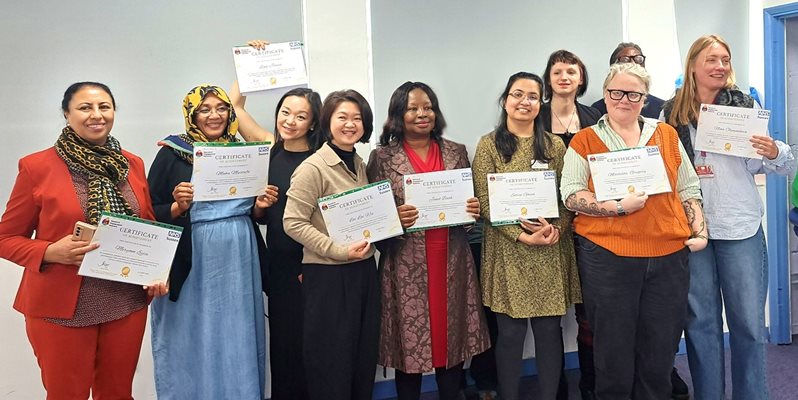
A group of people at an event holding up certificates and smiling

Community Researchers:

  • Help shape research to make it relevant, inclusive, and accessible
  • Bring community perspectives into research priorities and design
  • Support engagement with underserved communities and promote opportunities to take part
  • Work closely with VCSE organisations, researchers, and local health services

REN Community Researchers have:

  • Gathered views on health and care research from people from LGBTQ+, TNBI, and minoritised ethnic groups, leading to recommendations to improve the diversity of research participation in Sussex. You can read the report here.
  • Supported engagement on cancer research, conducting interviews in 14 different languages, and helping researchers understand community barriers and motivations; leading to the development of a Public and Community Involvement and Engagement Plan for the Sussex Cancer Research Centre. You can read the report here.
  • Designed and delivered mental health research engagement projects with underserved groups, increasing confidence and interest in future research. You can read the report here.
  • Contributed to the design and delivery of a range of health and care research studies across Sussex.
  • Shared lived experience insights and creative approaches at events and workshops to strengthen community-centred research across Sussex.

Hear from our Community Researchers about their work and what this means for research in Sussex.


Contact SussexREN@bsms.ac.uk to be linked with our network of Community Researchers.

BACKGROUND IMAGE FOR PANEL

Our Partners

The project is led by Anna-Marie Bibby-Jones, Senior Research Fellow for Equality Diversity & Inclusion, Sussex Partnership NHS Foundation Trust and Virginia Govoni, Head of the Health Research Partnership. 

The REN programme is overseen by the REN Leadership Group which draws together a range of key partners to develop and evaluate the impact of the work.

The Sussex REN Leadership Group Partners are:

Find out more about how our REN VCSE partners support more inclusive health and care research. 

A montage of different logos showing who is part of the Sussex REN

REN Recommendations and Resources

The Engaging Marginalised Communities report outlines the insight from forty-two interviews carried out by our Community Researchers, with people living in areas of deprivation who identify as LGBTQ, TNBI or racially minoritised/Global Majority community members. The report focused on people’s perceptions and experiences of the NHS, accessing health and care information, awareness and understanding of health and care research and views on participating in health and care research

Key recommendations from the work:  

  1. Research teams should consider how negative experiences and perceptions of marginalisation by mainstream society might impact engagement in health and care research.
  2. Conduct further research with Transgender, Non-binary, and Intersex (TNBI) communities to identify challenges they face when engaging with the NHS.
  3. Ensure translation and interpretation support is included in all health and care research activities.
  4. Health and care research teams should adopt a co-creative approach, exploring partnerships with relevant VCSEs at the early stages of planning a research study.
  5. Integrate community engagement and co-creation approaches into the planning of health and care research to support healthcare topics important to local communities.
  6. Maximise the accessibility of online information through local NHS websites.
  7. Ensure that marketing and communication of research materials reflect a broad demographic profile, allowing potential respondents to see themselves represented.
  8. Researchers should be mindful of unintentional barriers to participation that may arise due to language or learning difference

The project findings are explained in detail in the Project Report.

Please visit our resource library for further REN resources, guidance and report recommendations relevant to anyone looking to develop inclusive research.  Here you will find guidance for collaborative research, guidance on working with people with languages needs, creative approaches and more.